AG Hanley
Chemotaxis, Phagocytosis and Myosins
Research
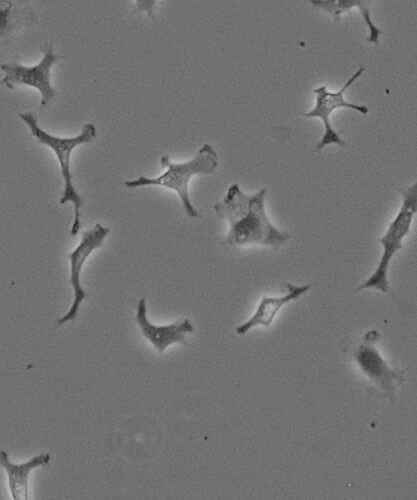
Chemotaxis: Macrophages play a role in the pathophysiology of most major diseases. Analogous to a shark detecting and swimming toward higher concentrations of blood to locate injured prey, macrophages (“big eaters”) spatially sense minute concentration differences in chemoattractants through G protein-coupled receptors and navigate toward the source – typically a site of injury and/or infection. Part of our work focuses on identifying the essential signaling pathways required for macrophages to polarize (form a front and rear), move, and navigate along such chemoattractant gradients.
Phagocytosis: When macrophages arrive at sites of injury and/or infection, they clear cellular debris and pathogens, such as bacteria and fungi, through phagocytosis (receptor-mediated ingestion of particles). Another focus of our work is to better understand the signaling pathways and cytoskeletal rearrangements required for macrophages to ingest particles.
Myosins: Beyond studying the regulation of actin dynamics in cell motility and phagocytosis, we aim to elucidate the functions of various unconventional myosins – actin-based motor proteins. In particular, our focus is on class XVIII myosins, Myo18A and Myo18B, and their physiological role in the assembly and maintenance of sarcomeres in cardiomyocytes.
Current Projects

Macrophages play a key role in inflammatory diseases, yet the mechanisms driving their recruitment to inflamed sites remain only partially understood. Our research focuses on complement C5a-mediated macrophage chemotaxis, integrating findings from knockout mouse models and existing literature. We highlight key regulators of cytoskeletal dynamics, including Rho GTPases, RhoGEFs (guanine nucleotide exchange factors), RhoGAPs (GTPase-activating proteins), myosins, actin NPFs (nucleation promoting factors), and actin nucleators. Using real-time chemotaxis assays, among other experimental approaches, we investigate how specific gene deletions affect macrophage cell polarization, motility, and chemotaxis.

We have also developed real-time imaging assays and used various knockout mouse models to explore the mechanism and signaling pathways of Fc receptor- and complement receptor-mediated phagocytosis. Similar to cell motility and chemotaxis, phagocytosis involves the coordinated local assembly and disassembly of actin filament-based structures.
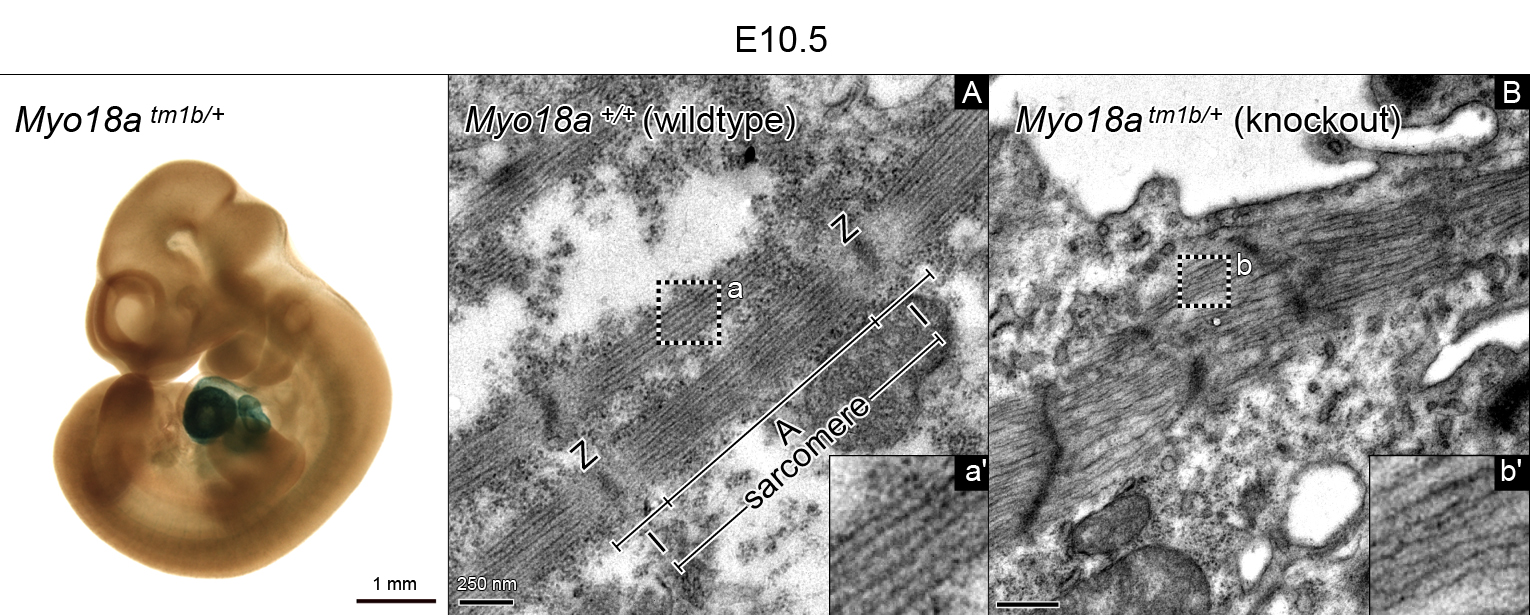
Myosins are a superfamily of actin-dependent motor proteins, encoded by 36 genes in humans and mice, divided into 12 classes, including conventional class 2 myosins and unconventional myosins. The class 18 myosins include Myo18A and Myo18B. We recently identified a striated muscle-specific isoform of Myo18A, which we denoted Myo18A-gamma, that localizes to sarcomeric A-bands, similar to Myo18B. The other isoforms, Myo18A-alpha and Myo18A-beta, are widely expressed. We found that deleting Myo18a specifically in cardiac myocytes is embryonic lethal in mice, suggesting that loss of the gamma-isoform is responsible for the lethality of global deletion of Myo18a. To better understand the roles of the various Myo18A isoforms, we are generating and screening isoform-specific Myo18A knockout mouse models. Additionally, we are using cultured cardiac myocytes to explore the roles of class 18 myosins.
Group Members

Group leader: Prof. Dr. med. habil. Peter J. Hanley
Peter Hanley completed a Master of Human Biology (MHB) and a Bachelor of Medicine and Surgery (MBChB) at the University of Auckland, New Zealand, and subsequently worked for over three years as a junior doctor in various hospitals in Auckland. Additionally, he spent 3-4 years at the Department of Physiology (University of Auckland), where, as part of his doctoral research (PhD), he investigated the effects of inhalational anesthetics on intracellular [Ca2+] and force development in rat cardiac trabeculae. More recently, he has focused on elucidating molecular mechanisms of motility, chemotaxis, and phagocytosis of macrophages, as well as the physiological roles of unconventional myosins in non-muscle and striated muscle cells using knockout mouse models.
2024
- Horsthemke, M., Arnaud, C. A., & Hanley, P. J. (2024). Are the class 18 myosins Myo18A and Myo18B specialist sarcomeric proteins?. Frontiers in physiology, 15, 1401717. https://doi.org/10.3389/fphys.2024.1401717
2023
- Hanley P. J. (2023). Elusive physiological role of prostatic acid phosphatase (PAP): generation of choline for sperm motility via auto-and paracrine cholinergic signaling. Frontiers in physiology, 14, 1327769. https://doi.org/10.3389/fphys.2023.1327769
2022
- Russo, A., Schürmann, H., Brandt, M., Scholz, K., Matos, A. L. L., Grill, D., Revenstorff, J., Rembrink, M., von Wulffen, M., Fischer-Riepe, L., Hanley, P. J., Häcker, H., Prünster, M., Sánchez-Madrid, F., Hermann, S., Klotz, L., Gerke, V., Betz, T., Vogl, T., & Roth, J. (2022). Alarming and Calming: Opposing Roles of S100A8/S100A9 Dimers and Tetramers on Monocytes. Advanced science (Weinheim, Baden-Wurttemberg, Germany), 9(36), e2201505. https://doi.org/10.1002/advs.202201505
2021
- Walbaum, S., Ambrosy, B., Schütz, P., Bachg, A. C., Horsthemke, M., Leusen, J. H. W., Mócsai, A., & Hanley, P. J. (2021). Complement receptor 3 mediates both sinking phagocytosis and phagocytic cup formation via distinct mechanisms. The Journal of biological chemistry, jbc.RA120.015346. Advance online publication. https://doi.org/10.1074/jbc.RA120.015346
2020
- Hanley, P. J., Vollmer, V., & Bähler, M. (2020). Class IX Myosins: Motorized RhoGAP Signaling Molecules. Advances in experimental medicine and biology, 1239, 381–389. https://doi.org/10.1007/978-3-030-38062-5_16
- van den Bos, E., Ambrosy, B., Horsthemke, M., Walbaum, S., Bachg, A. C., Wettschureck, N., Innamorati, G., Wilkie, T. M., & Hanley, P. J. (2020). Knockout mouse models reveal the contributions of G protein subunits to complement C5a receptor-mediated chemotaxis. The Journal of biological chemistry, 295(22), 7726–7742. https://doi.org/10.1074/jbc.ra119.011984
- Hanley, P. J., Vollmer, V., & Bähler, M. (2020). Class IX Myosins: Motorized RhoGAP Signaling Molecules. Advances in experimental medicine and biology, 1239, 381–389. https://doi.org/10.1007/978-3-030-38062-5_16
- van den Bos, E., Walbaum, S., Horsthemke, M., Bachg, A. C., & Hanley, P. J. (2020). Time-lapse Imaging of Mouse Macrophage Chemotaxis. Journal of visualized experiments : JoVE, (158), 10.3791/60750. https://doi.org/10.3791/60750
2019
- Bachg, A. C., Horsthemke, M., Skryabin, B. V., Klasen, T., Nagelmann, N., Faber, C., Woodham, E., Machesky, L. M., Bachg, S., Stange, R., Jeong, H. W., Adams, R. H., Bähler, M., & Hanley, P. J. (2019). Phenotypic analysis of Myo10 knockout (Myo10tm2/tm2) mice lacking full-length (motorized) but not brain-specific headless myosin X. Scientific reports, 9(1), 597. https://doi.org/10.1038/s41598-018-37160-y
- Horsthemke, M., Nutter, L. M. J., Bachg, A. C., Skryabin, B. V., Honnert, U., Zobel, T., Bogdan, S., Stoll, M., Seidl, M. D., Müller, F. U., Ravens, U., Unger, A., Linke, W. A., van Gorp, P. R. R., de Vries, A. A. F., Bähler, M., & Hanley, P. J. (2019). A novel isoform of myosin 18A (Myo18Aγ) is an essential sarcomeric protein in mouse heart. The Journal of biological chemistry, 294(18), 7202–7218. https://doi.org/10.1074/jbc.RA118.004560
2018
- Horsthemke, M., Wilden, J., Bachg, A. C., & Hanley, P. J. (2018). Time-lapse 3D Imaging of Phagocytosis by Mouse Macrophages. Journal of visualized experiments : JoVE, (140), 57566.
- Tjaden, K., Adam, C., Godfrey, R., Hanley, P. J., Pardali, E., & Waltenberger, J. (2018). Low density lipoprotein interferes with intracellular signaling of monocytes resulting in impaired chemotaxis and enhanced chemokinesis. International journal of cardiology, 255, 160–165. https://doi.org/10.1016/j.ijcard.2017.11.109
2017
- Horsthemke, M., Bachg, A. C., Groll, K., Moyzio, S., Müther, B., Hemkemeyer, S. A., Wedlich-Söldner, R., Sixt, M., Tacke, S., Bähler, M., & Hanley, P. J. (2017). Multiple roles of filopodial dynamics in particle capture and phagocytosis and phenotypes of Cdc42 and Myo10 deletion. The Journal of biological chemistry, 292(17), 7258–7273. https://doi.org/10.1074/jbc.M116.766923
2014
- Xu, Y., Pektor, S., Balkow, S., Hemkemeyer, S. A., Liu, Z., Grobe, K., Hanley, P. J., Shen, L., Bros, M., Schmidt, T., Bähler, M., & Grabbe, S. (2014). Dendritic cell motility and T cell activation requires regulation of Rho-cofilin signaling by the Rho-GTPase activating protein myosin IXb. Journal of immunology (Baltimore, Md. : 1950), 192(8), 3559–3568. https://doi.org/10.4049/jimmunol.1300695
- Königs, V., Jennings, R., Vogl, T., Horsthemke, M., Bachg, A. C., Xu, Y., Grobe, K., Brakebusch, C., Schwab, A., Bähler, M., Knaus, U. G., & Hanley, P. J. (2014). Mouse macrophages completely lacking Rho subfamily GTPases (RhoA, RhoB, and RhoC) have severe lamellipodial retraction defects, but robust chemotactic navigation and altered motility. The Journal of biological chemistry, 289(44), 30772–30784. https://doi.org/10.1074/jbc.M114.563270
2013
- Stock, C., Ludwig, F. T., Hanley, P. J., & Schwab, A. (2013). Roles of ion transport in control of cell motility. Comprehensive Physiology, 3(1), 59–119. https://doi.org/10.1002/cphy.c110056
- Lindemann, O., Umlauf, D., Frank, S., Schimmelpfennig, S., Bertrand, J., Pap, T., Hanley, P. J., Fabian, A., Dietrich, A., & Schwab, A. (2013). TRPC6 regulates CXCR2-mediated chemotaxis of murine neutrophils. Journal of immunology (Baltimore, Md. : 1950), 190(11), 5496–5505. https://doi.org/10.4049/jimmunol.1201502
2012
- Hanley, P. J., Kronlage, M., Kirschning, C., Del Rey, A., Di Virgilio, F., Leipziger, J., Chessell, I. P., Sargin, S., Filippov, M. A., Lindemann, O., Mohr, S., Königs, V., Schillers, H., Bähler, M., & Schwab, A. (2012). Transient P2X7 receptor activation triggers macrophage death independent of Toll-like receptors 2 and 4, caspase-1, and pannexin-1 proteins. The Journal of biological chemistry, 287(13), 10650–10663. https://doi.org/10.1074/jbc.M111.332676
- Schwab, A., Fabian, A., Hanley, P. J., & Stock, C. (2012). Role of ion channels and transporters in cell migration. Physiological reviews, 92(4), 1865–1913. https://doi.org/10.1152/physrev.00018.2011
2011
- Bähler, M., Elfrink, K., Hanley, P. J., Thelen, S., & Xu, Y. (2011). Cellular functions of class IX myosins in epithelia and immune cells. Biochemical Society transactions, 39(5), 1166–1168. https://doi.org/10.1042/BST0391166
- Isfort, K., Ebert, F., Bornhorst, J., Sargin, S., Kardakaris, R., Pasparakis, M., Bähler, M., Schwerdtle, T., Schwab, A., & Hanley, P. J. (2011). Real-time imaging reveals that P2Y2 and P2Y12 receptor agonists are not chemoattractants and macrophage chemotaxis to complement C5a is phosphatidylinositol 3-kinase (PI3K)- and p38 mitogen-activated protein kinase (MAPK)-independent. The Journal of biological chemistry, 286(52), 44776–44787. https://doi.org/10.1074/jbc.M111.289793
2010
- Kronlage, M., Song, J., Sorokin, L., Isfort, K., Schwerdtle, T., Leipziger, J., Robaye, B., Conley, P. B., Kim, H. C., Sargin, S., Schön, P., Schwab, A., & Hanley, P. J. (2010). Autocrine purinergic receptor signaling is essential for macrophage chemotaxis. Science signaling, 3(132), ra55. https://doi.org/10.1126/scisignal.2000588
- Hanley, P. J., Xu, Y., Kronlage, M., Grobe, K., Schön, P., Song, J., Sorokin, L., Schwab, A., & Bähler, M. (2010). Motorized RhoGAP myosin IXb (Myo9b) controls cell shape and motility. Proceedings of the National Academy of Sciences of the United States of America, 107(27), 12145–12150. https://doi.org/10.1073/pnas.0911986107
- Gao, Y. D., Hanley, P. J., Rinné, S., Zuzarte, M., & Daut, J. (2010). Calcium-activated K(+) channel (K(Ca)3.1) activity during Ca(2+) store depletion and store-operated Ca(2+) entry in human macrophages. Cell calcium, 48(1), 19–27. https://doi.org/10.1016/j.ceca.2010.06.002
- Li, X., Rapedius, M., Baukrowitz, T., Liu, G. X., Srivastava, D. K., Daut, J., & Hanley, P. J. (2010). 5-Hydroxydecanoate and coenzyme A are inhibitors of native sarcolemmal KATP channels in inside-out patches. Biochimica et biophysica acta, 1800(3), 385–391. https://doi.org/10.1016/j.bbagen.2009.11.012
2008
- Schwab, A., Hanley, P. J., Fabian, A., & Stock, C. (2008). Potassium channels keep mobile cells on the go. Physiology (Bethesda, Md.), 23, 212–220. https://doi.org/10.1152/physiol.00003.2008
2007
- Putzke, C., Hanley, P. J., Schlichthörl, G., Preisig-Müller, R., Rinné, S., Anetseder, M., Eckenhoff, R., Berkowitz, C., Vassiliou, T., Wulf, H., & Eberhart, L. (2007). Differential effects of volatile and intravenous anesthetics on the activity of human TASK-1. American journal of physiology. Cell physiology, 293(4), C1319–C1326. https://doi.org/10.1152/ajpcell.00100.2007
2006
- del Rey, A., Renigunta, V., Dalpke, A. H., Leipziger, J., Matos, J. E., Robaye, B., Zuzarte, M., Kavelaars, A., & Hanley, P. J. (2006). Knock-out mice reveal the contributions of P2Y and P2X receptors to nucleotide-induced Ca2+ signaling in macrophages. The Journal of biological chemistry, 281(46), 35147–35155. https://doi.org/10.1074/jbc.M607713200
2005
- Hanley, P. J., & Daut, J. (2005). K(ATP) channels and preconditioning: a re-examination of the role of mitochondrial K(ATP) channels and an overview of alternative mechanisms. Journal of molecular and cellular cardiology, 39(1), 17–50. https://doi.org/10.1016/j.yjmcc.2005.04.002
- Hanley, P. J., Dröse, S., Brandt, U., Lareau, R. A., Banerjee, A. L., Srivastava, D. K., Banaszak, L. J., Barycki, J. J., Van Veldhoven, P. P., & Daut, J. (2005). 5-Hydroxydecanoate is metabolised in mitochondria and creates a rate-limiting bottleneck for beta-oxidation of fatty acids. The Journal of physiology, 562(Pt 2), 307–318. https://doi.org/10.1113/jphysiol.2004.073932
- Burmester, M. D., Schlüter, K. D., Daut, J., & Hanley, P. J. (2005). Enantioselective actions of bupivacaine and ropivacaine on coronary vascular resistance at cardiotoxic concentrations. Anesthesia and analgesia, 100(3), 707–712. https://doi.org/10.1213/01.ANE.0000146511.79069.01
- Kaufmann, A., Musset, B., Limberg, S. H., Renigunta, V., Sus, R., Dalpke, A. H., Heeg, K. M., Robaye, B., & Hanley, P. J. (2005). "Host tissue damage" signal ATP promotes non-directional migration and negatively regulates toll-like receptor signaling in human monocytes. The Journal of biological chemistry, 280(37), 32459–32467. https://doi.org/10.1074/jbc.M505301200
2004
- Hanley, P. J., Musset, B., Renigunta, V., Limberg, S. H., Dalpke, A. H., Sus, R., Heeg, K. M., Preisig-Müller, R., & Daut, J. (2004). Extracellular ATP induces oscillations of intracellular Ca2+ and membrane potential and promotes transcription of IL-6 in macrophages. Proceedings of the National Academy of Sciences of the United States of America, 101(25), 9479–9484. https://doi.org/10.1073/pnas.0400733101
- Hanley, P. J., ter Keurs, H. E., & Cannell, M. B. (2004). Excitation-contraction coupling in the heart and the negative inotropic action of volatile anesthetics. Anesthesiology, 101(4), 999–1014. https://doi.org/10.1097/00000542-200410000-00027
2003
- Hanley, P. J., Gopalan, K. V., Lareau, R. A., Srivastava, D. K., von Meltzer, M., & Daut, J. (2003). Beta-oxidation of 5-hydroxydecanoate, a putative blocker of mitochondrial ATP-sensitive potassium channels. The Journal of physiology, 547(Pt 2), 387–393. https://doi.org/10.1113/jphysiol.2002.037044
2002
- Hanley, P. J., Mickel, M., Löffler, M., Brandt, U., & Daut, J. (2002). K(ATP) channel-independent targets of diazoxide and 5-hydroxydecanoate in the heart. The Journal of physiology, 542(Pt 3), 735–741. https://doi.org/10.1113/jphysiol.2002.023960
- Hanley, P. J., Ray, J., Brandt, U., & Daut, J. (2002). Halothane, isoflurane and sevoflurane inhibit NADH:ubiquinone oxidoreductase (complex I) of cardiac mitochondria. The Journal of physiology, 544(3), 687–693. https://doi.org/10.1113/jphysiol.2002.025015
- Rajan, S., Preisig-Müller, R., Wischmeyer, E., Nehring, R., Hanley, P. J., Renigunta, V., Musset, B., Schlichthörl, G., Derst, C., Karschin, A., & Daut, J. (2002). Interaction with 14-3-3 proteins promotes functional expression of the potassium channels TASK-1 and TASK-3. The Journal of physiology, 545(1), 13–26. https://doi.org/10.1113/jphysiol.2002.027052
- Ray, J., Noll, F., Daut, J., & Hanley, P. J. (2002). Long-chain fatty acids increase basal metabolism and depolarize mitochondria in cardiac muscle cells. American journal of physiology. Heart and circulatory physiology, 282(4), H1495–H1501. https://doi.org/10.1152/ajpheart.00696.2001
2001
- Liu, G. X., Hanley, P. J., Ray, J., & Daut, J. (2001). Long-chain acyl-coenzyme A esters and fatty acids directly link metabolism to K(ATP) channels in the heart. Circulation research, 88(9), 918–924. https://doi.org/10.1161/hh0901.089881

Dr. rer. nat. Markus Horsthemke (Postdoc)
Markus Horsthemke studied Biology at the University of Münster, Münster, Germany, and obtained his PhD at the Institute for Molecular Cell Biology (IMZ). His research focuses on the function of class XVIII myosins, Myo18A and Myo18B, in sarcomere formation in cardiomyocytes as well as their role in non-muscle cells. Moreover, he is interested in exploring the regulatory pathways underlying the chemotaxis and phagocytosis of macrophages.
2024
- Horsthemke, M., Arnaud, C. A., & Hanley, P. J. (2024). Are the class 18 myosins Myo18A and Myo18B specialist sarcomeric proteins?. Frontiers in physiology, 15, 1401717. https://doi.org/10.3389/fphys.2024.1401717
2021
- Walbaum, S., Ambrosy, B., Schütz, P., Bachg, A. C., Horsthemke, M., Leusen, J. H. W., Mócsai, A., & Hanley, P. J. (2021). Complement receptor 3 mediates both sinking phagocytosis and phagocytic cup formation via distinct mechanisms. The Journal of biological chemistry, jbc.RA120.015346. Advance online publication. https://doi.org/10.1074/jbc.RA120.015346
2020
- van den Bos, E., Walbaum, S., Horsthemke, M., Bachg, A. C., & Hanley, P. J. (2020). Time-lapse Imaging of Mouse Macrophage Chemotaxis. Journal of visualized experiments : JoVE, (158), 10.3791/60750. https://doi.org/10.3791/60750
2019
- Horsthemke, M., Nutter, L. M. J., Bachg, A. C., Skryabin, B. V., Honnert, U., Zobel, T., Bogdan, S., Stoll, M., Seidl, M. D., Müller, F. U., Ravens, U., Unger, A., Linke, W. A., van Gorp, P. R. R., de Vries, A. A. F., Bähler, M., & Hanley, P. J. (2019). A novel isoform of myosin 18A (Myo18Aγ) is an essential sarcomeric protein in mouse heart. The Journal of biological chemistry, 294(18), 7202–7218. https://doi.org/10.1074/jbc.RA118.004560
- Bachg, A. C., Horsthemke, M., Skryabin, B. V., Klasen, T., Nagelmann, N., Faber, C., Woodham, E., Machesky, L. M., Bachg, S., Stange, R., Jeong, H. W., Adams, R. H., Bähler, M., & Hanley, P. J. (2019). Phenotypic analysis of Myo10 knockout (Myo10tm2/tm2) mice lacking full-length (motorized) but not brain-specific headless myosin X. Scientific reports, 9(1), 597. https://doi.org/10.1038/s41598-018-37160-y
2018
- Horsthemke, M., Wilden, J., Bachg, A. C., & Hanley, P. J. (2018). Time-lapse 3D Imaging of Phagocytosis by Mouse Macrophages. Journal of visualized experiments : JoVE, (140), 57566.
2017
- Horsthemke, M., Bachg, A. C., Groll, K., Moyzio, S., Müther, B., Hemkemeyer, S. A., Wedlich-Söldner, R., Sixt, M., Tacke, S., Bähler, M., & Hanley, P. J. (2017). Multiple roles of filopodial dynamics in particle capture and phagocytosis and phenotypes of Cdc42 and Myo10 deletion. The Journal of biological chemistry, 292(17), 7258–7273. https://doi.org/10.1074/jbc.M116.766923
2014
- Königs, V., Jennings, R., Vogl, T., Horsthemke, M., Bachg, A. C., Xu, Y., Grobe, K., Brakebusch, C., Schwab, A., Bähler, M., Knaus, U. G., & Hanley, P. J. (2014). Mouse macrophages completely lacking Rho subfamily GTPases (RhoA, RhoB, and RhoC) have severe lamellipodial retraction defects, but robust chemotactic navigation and altered motility. The Journal of biological chemistry, 289(44), 30772–30784. https://doi.org/10.1074/jbc.M114.563270
2011
- Isfort, K., Ebert, F., Bornhorst, J., Sargin, S., Kardakaris, R., Pasparakis, M., Bähler, M., Schwerdtle, T., Schwab, A., & Hanley, P. J. (2011). Real-time imaging reveals that P2Y2 and P2Y12 receptor agonists are not chemoattractants and macrophage chemotaxis to complement C5a is phosphatidylinositol 3-kinase (PI3K)- and p38 mitogen-activated protein kinase (MAPK)-independent. The Journal of biological chemistry, 286(52), 44776–44787. https://doi.org/10.1074/jbc.M111.289793

Dr. rer. nat. Jia Guo (Postdoc)
E-Mail: jia.guo@hmu-potsdam.de

E-Mail: unknown@domain.de
Open Positions in the Hanley Group
Medical PhD Students (m/f/d)
at the Medical Faculty of the HMU Potsdam
We are looking for medical students interested in completing their PhD thesis in our group.
Application
Send us a short e-mail about your research interest to peter.hanley@hmu-potsdam.de.
HMU, Professor Dr. Peter Hanley, Schiffsbauergasse Nr. 14, 14467 Potsdam